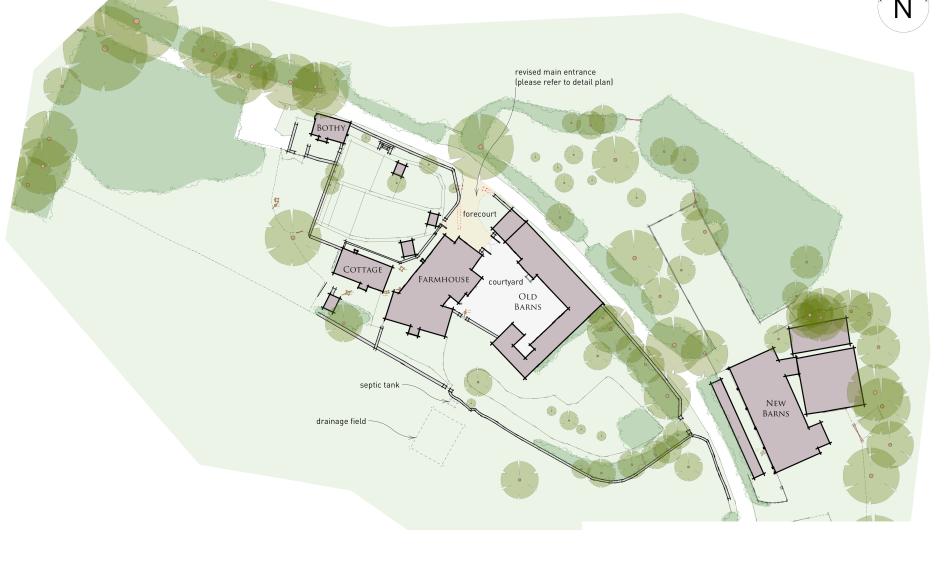
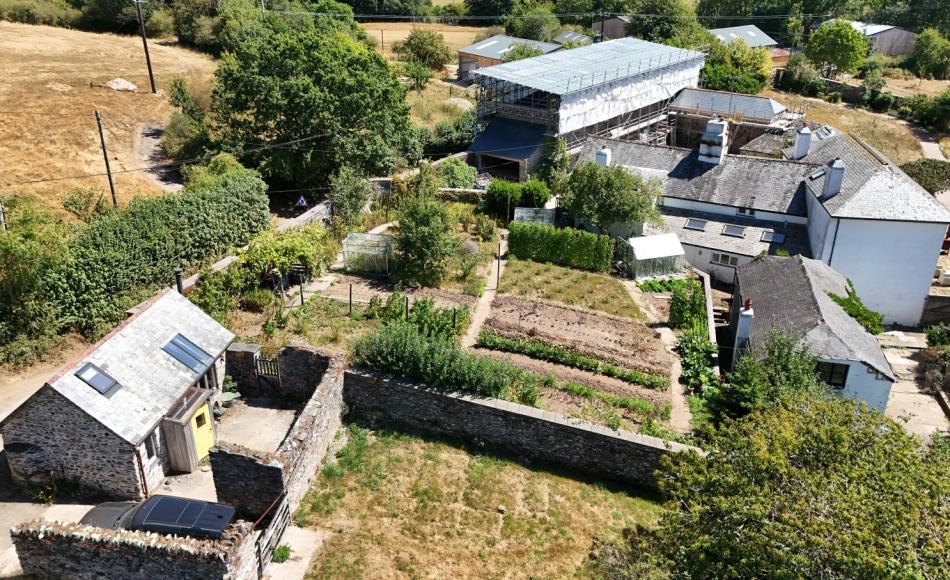
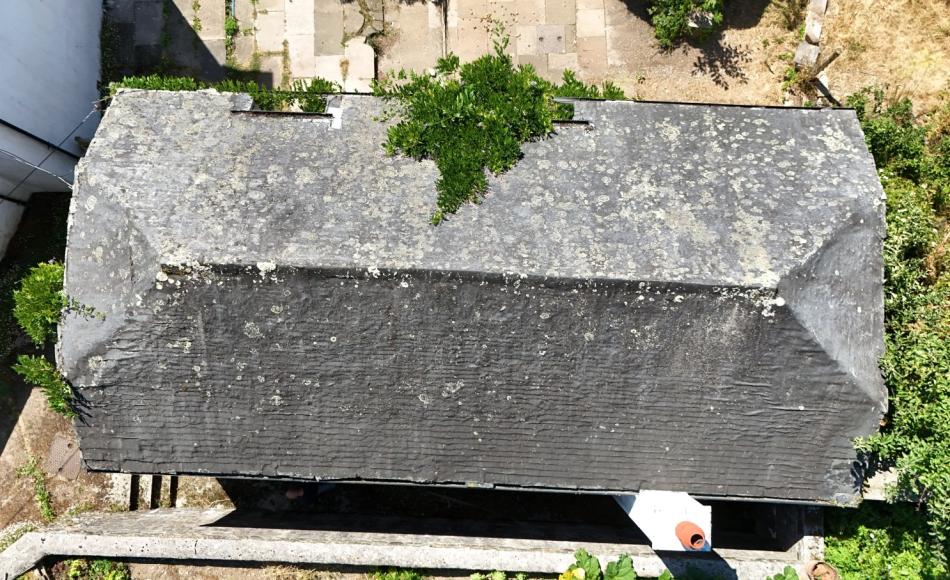
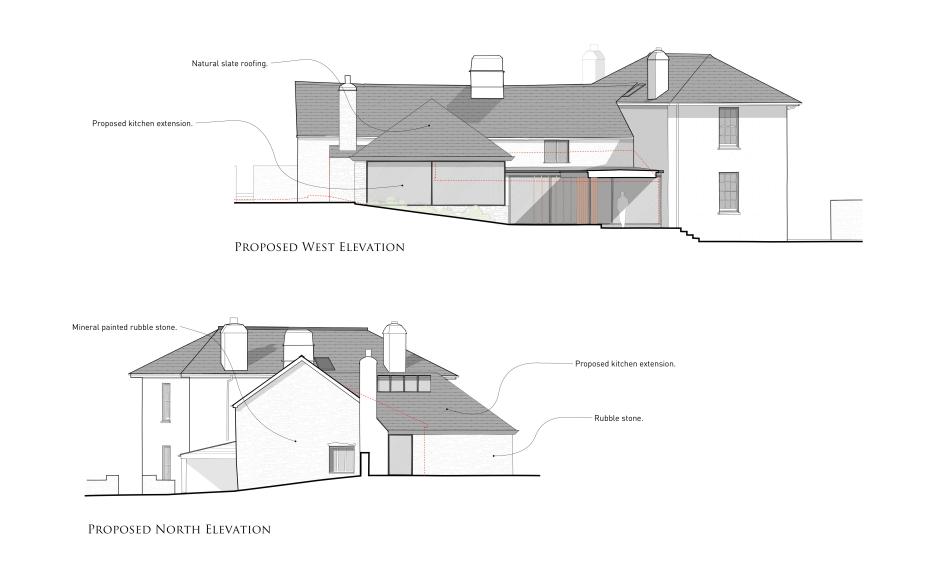
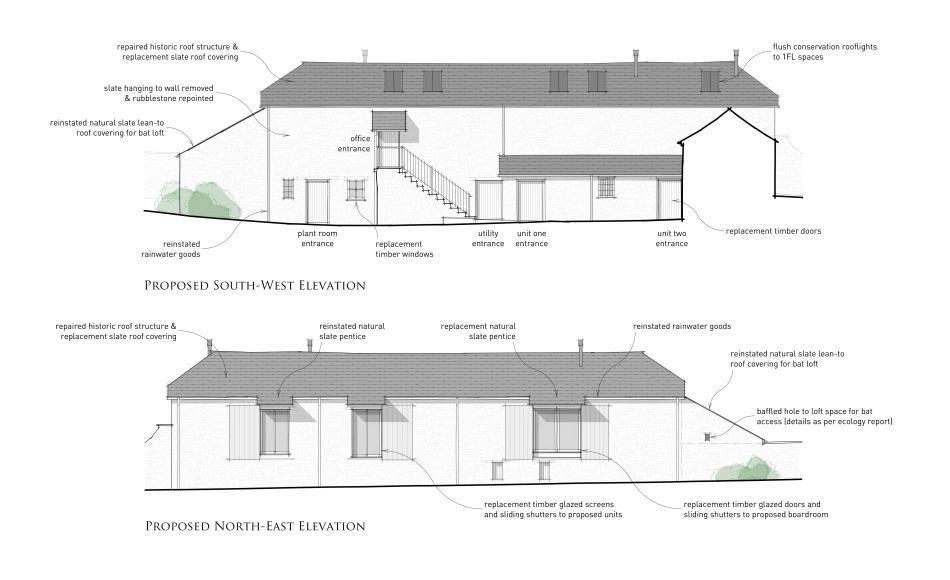
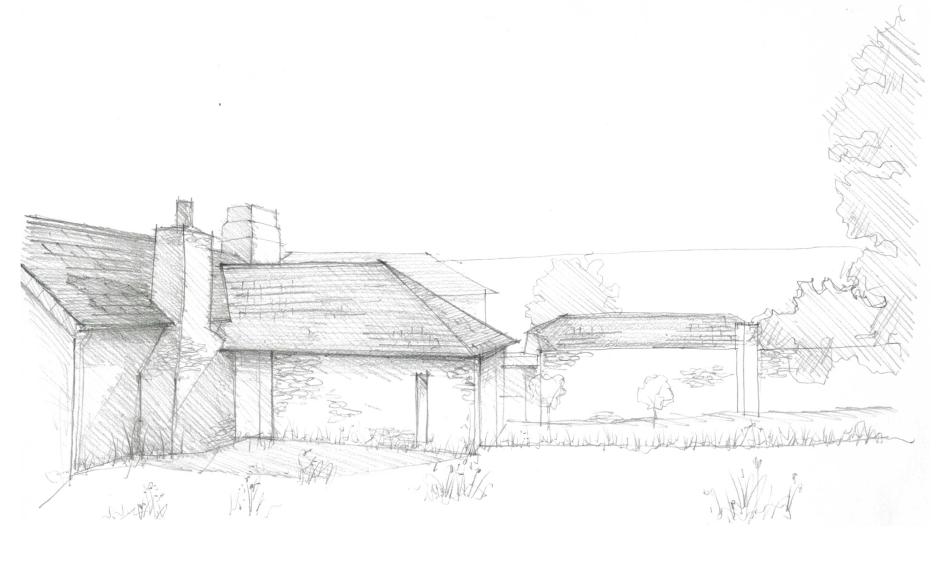
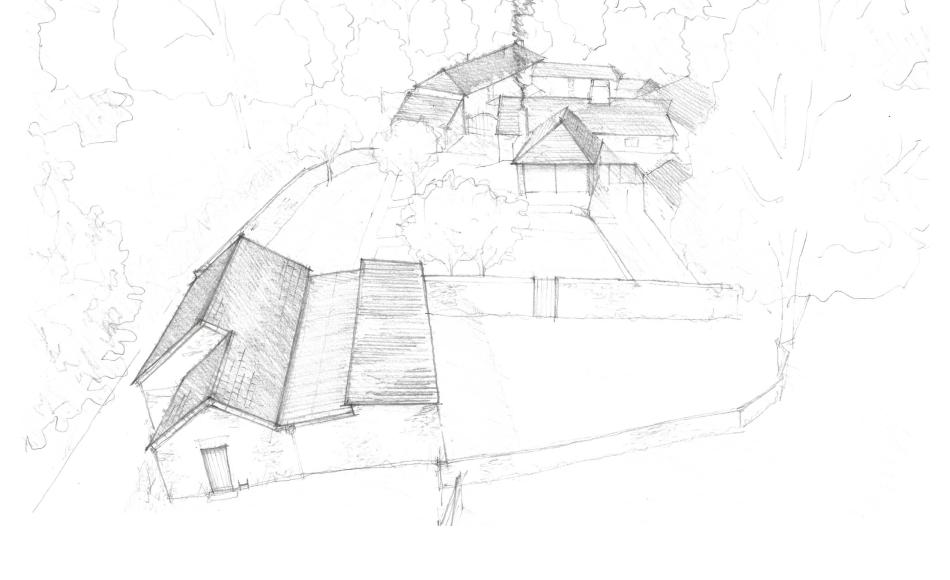
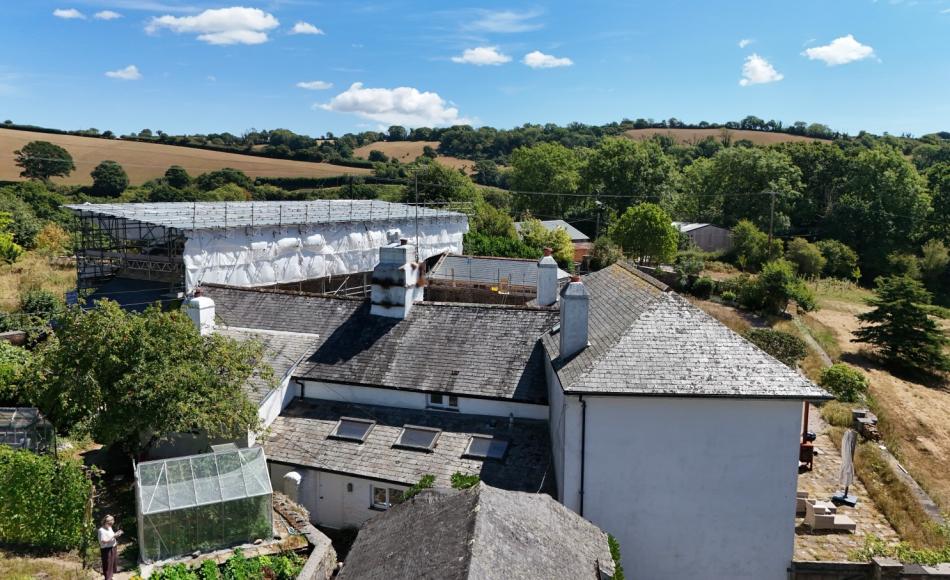

Located in the South Hams countryside, near Totnes, its origins are still deducible from the medieval core stone and slate roofed farmhouse with substantial kitchen fireplaces. It was extended in the Victorian era, with a hipped roof white rendered extension, which we would typically call Georgian in style. At the same time a courtyard of two storey agricultural stone barns was built with loading bays to the road. This would have both allowed and been possible by the adjacent station on the strawberry line, which is evident within the pointing of the barns, which incorporate black, gritty fuel ash within their white lime mortar.
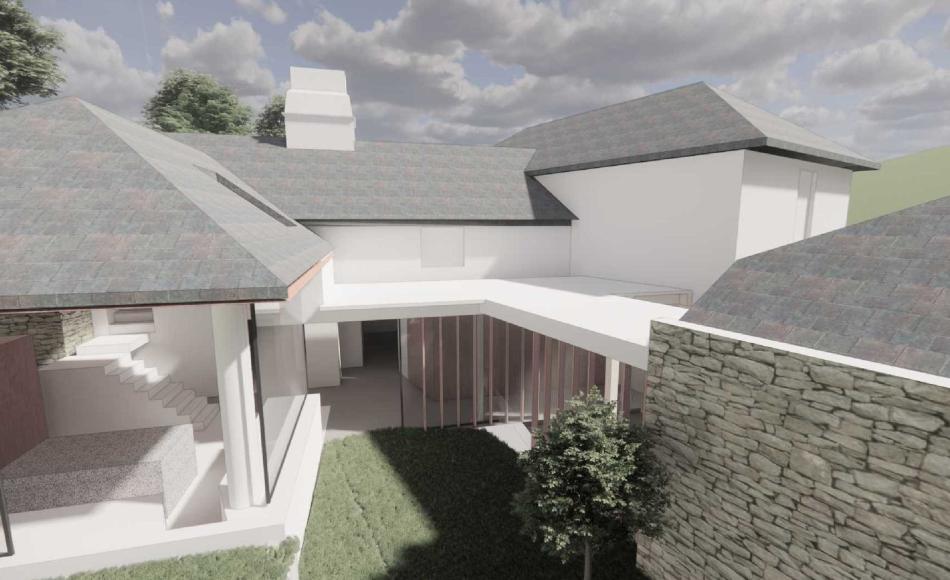
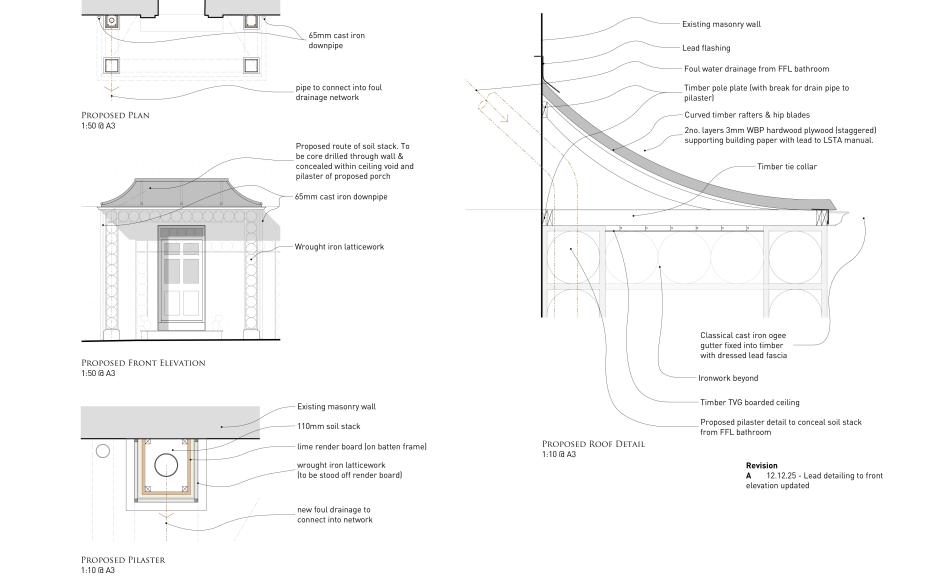
Having received planning and listed building consent for various buildings on the estate, we are now in the process of phased works to sensitively repair, upgrade and extend the barns and farmhouse.
The core of the site is a complex of former agriculture buildings which are being thoughtfully upgraded to remove inappropriate 20th century additions, refurbish and upgrade the existing accommodation and add carefully designed extensions. Part of the Victorian works involved laying out a substantial productive walled garden to feed the estate, and no doubt, to sell produce to the wider area. This presents a significant challenge because of the substantial change in level between the house and walled garden, which has been further exacerbated by the dumping of spoil to level out the garden at a storey higher than the house.
We have worked closely with landscape architects, Harris Bugg studio, to ensure the scheme considers integration of the landscape, and architectural design that is sensitive and considerate of its context. Our client’s aims include rewilding of the wider estate and biodiversity improvements which allied with ensuring a sustainable, productive farming method is integrated into the estate, promotes in a circular fashion, custodianship of the heritage buildings.
The aim is to achieve a farmstead which is socially and economically viable, and can allow this heritage estate, which has been evolving over some five centuries to continue to quietly thrive and sensitively evolve for further centuries to come.