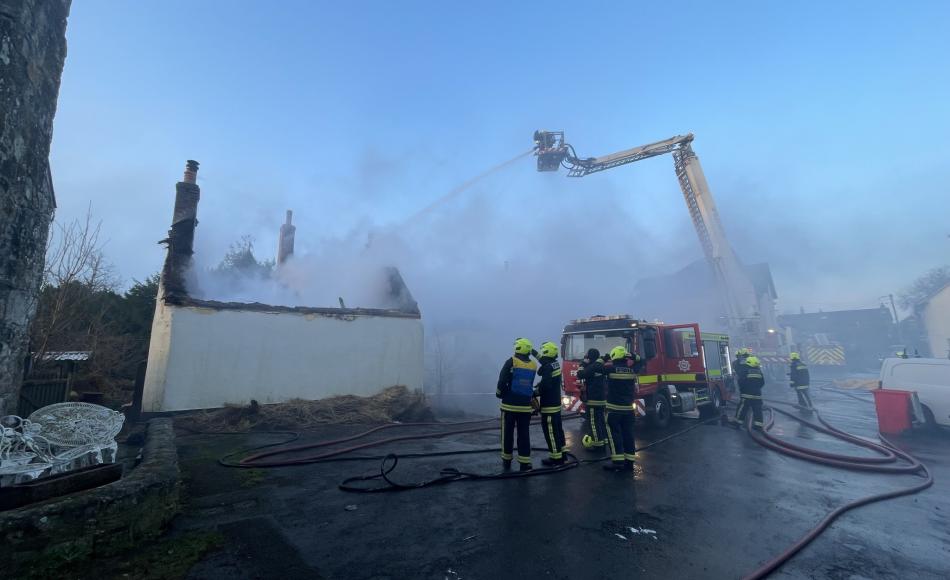
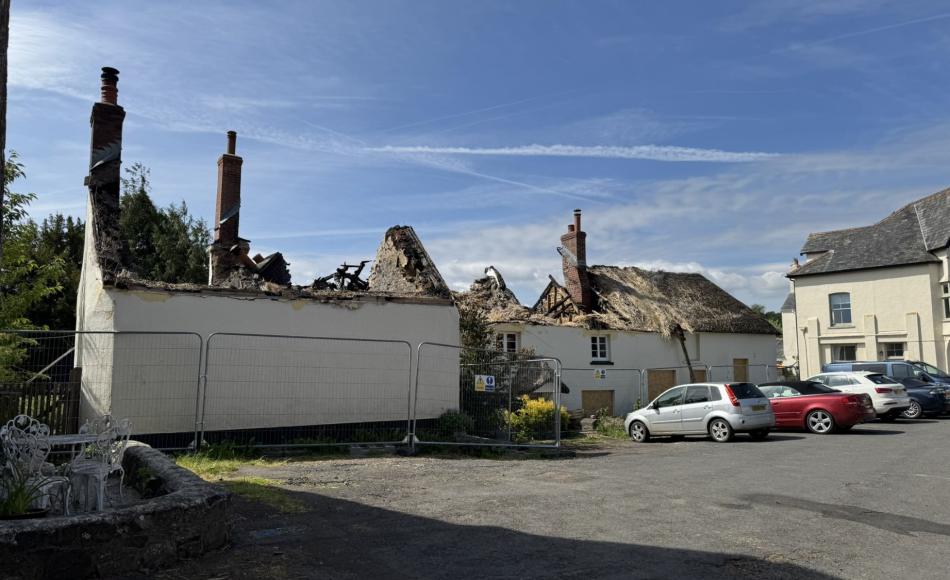
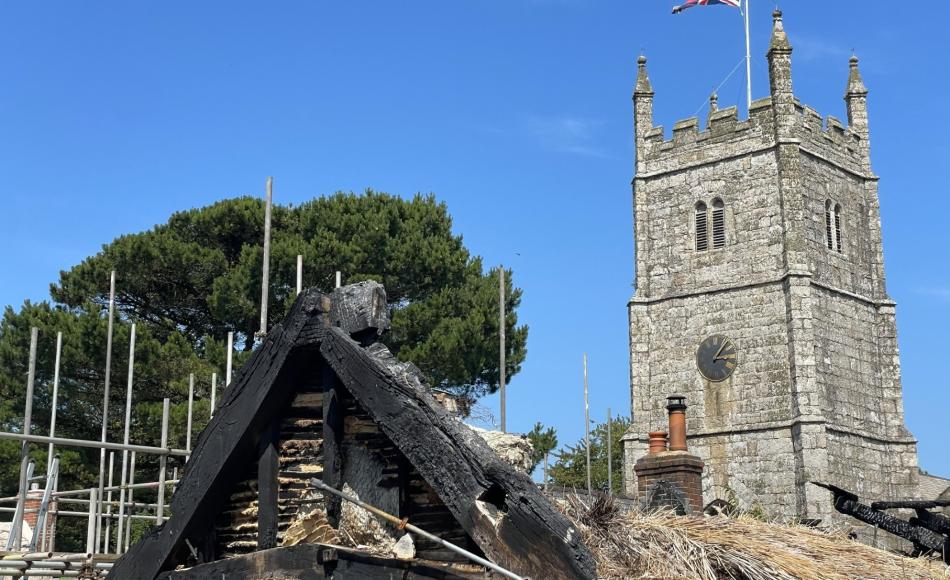
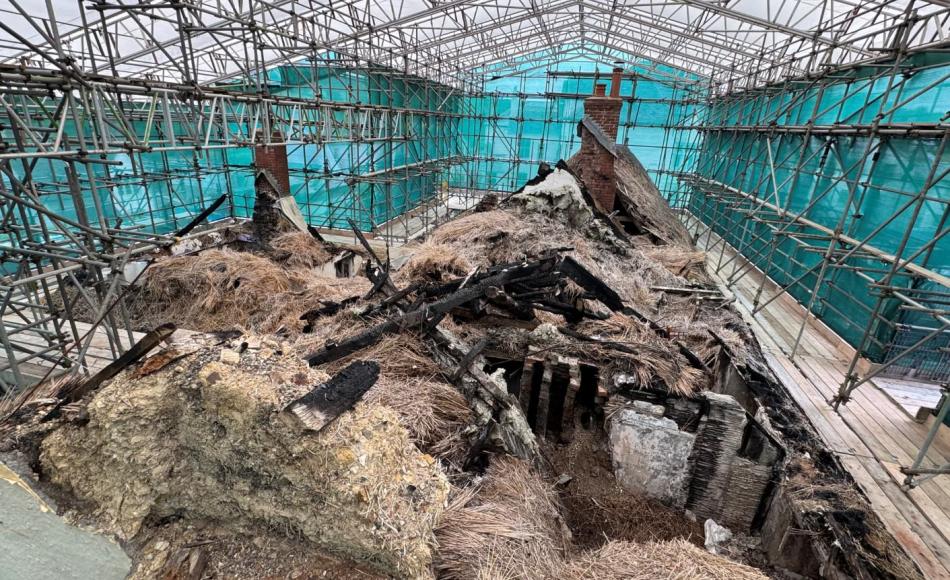

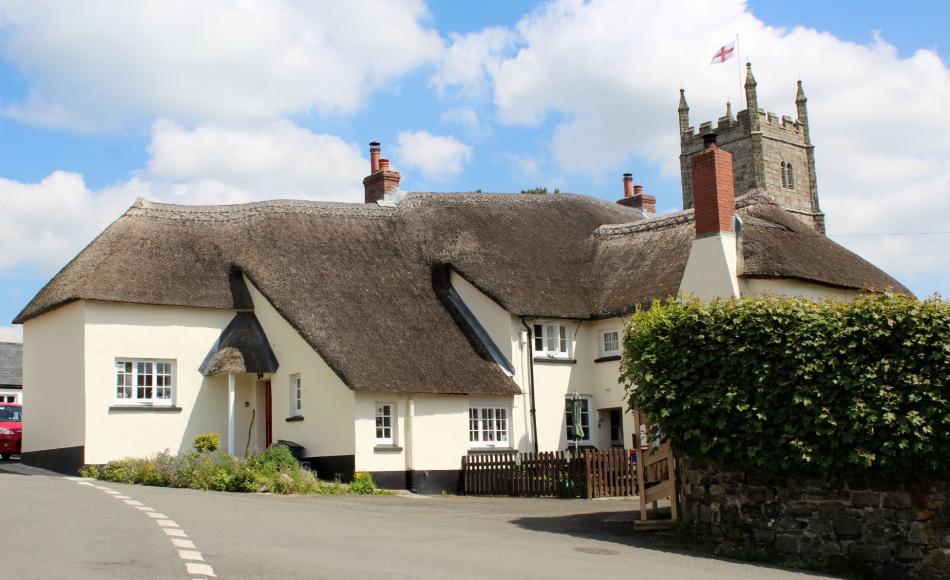

After a serious fire destroyed a terrace of four thatched cottages in Dartmoor National Park, we have been working with the National Trust to develop plans for their conservation and reconstruction. The Grade II Listed cottages are an important presence in the village of Drewsteignton, with the oldest parts dating to the early 15th century.
What happened?
On the evening of Monday 17th March 2025, a fire broke out in the thatch surrounding a chimney. Strong winds fanned the flames causing the fire to spread. The emergency service response was swift, with 14 fire engines and over 100 firefighters from 28 stations tackling the blaze. Despite their tremendous efforts, the fire destroyed the roof and caused significant interior damage. Fortunately, there were no injuries during the incident.
Significance
The four cottages affected by the fire were Grade II listed thatched cob cottages, gifted to the National Trust – along with Castle Drogo – by the Drewe family in 1974.
Although considerably altered over time, the cottages originally formed a single-storey, three-room medieval open hall dwelling. Prior to the fire, the thatched roof still had remnants of late medieval smoke-blackened thatch within the roof space. Dendrochronology testing of the roof timbers suggests that the building was constructed between 1400 and 1421.
The National Trust, in collaboration with its insurers, is working to restore the cottages to their former glory. To support this complex and sensitive project, Jonathan Rhind Architects, as Conservation Architects, have been appointed to lead the works.
Next Steps
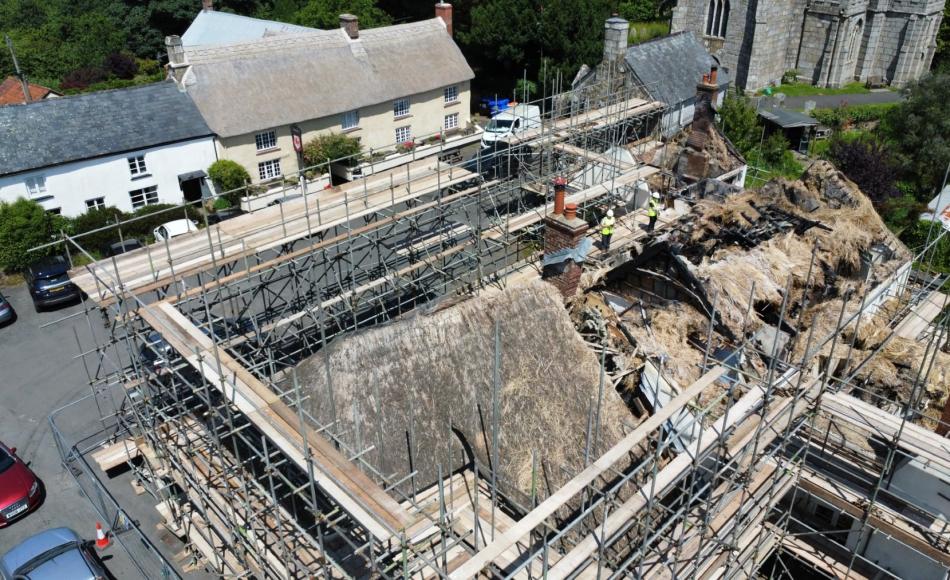
The cottages are primarily constructed from cob, so the first priority has been to protect the structures from further water damage. This has involved erecting a substantial covered scaffold which provides essential shelter and stability during the restoration process.
Work is now underway to assess the historic and architectural significance of the buildings, including their evolution over time. Efforts are being made to identify and evaluate surviving historic fabric, with the aim of retaining or repairing it where possible. However, the extent of the fire damage has made this assessment particularly challenging.
Because of safety concerns, access to the cottage interiors has been limited. A careful, cottage-by-cottage salvage process is being undertaken, and involves:
- Installing temporary structural supports
- Safely accessing and stabilising the buildings
- Removing debris
- Preserving salvageable architectural elements
Reinstatement
Once salvage operations are complete, a full scope of repairs will be developed and permissions obtained to reinstate the cottages as residential homes. This will include retention of historic materials where feasible, and introduction of sensitive upgrades, such as improved insulation and fire protection, alongside other measures to ensure the cottages are safe, comfortable, and sustainable for future residents.
The buildings are in a fragile condition, and the process to reinstate these characterful historic buildings is complex and time-consuming. The patience and support of the Drewsteignton community during the ongoing works, has been appreciated and the project team are working hard to ensure a swift and sensitive reconstruction.